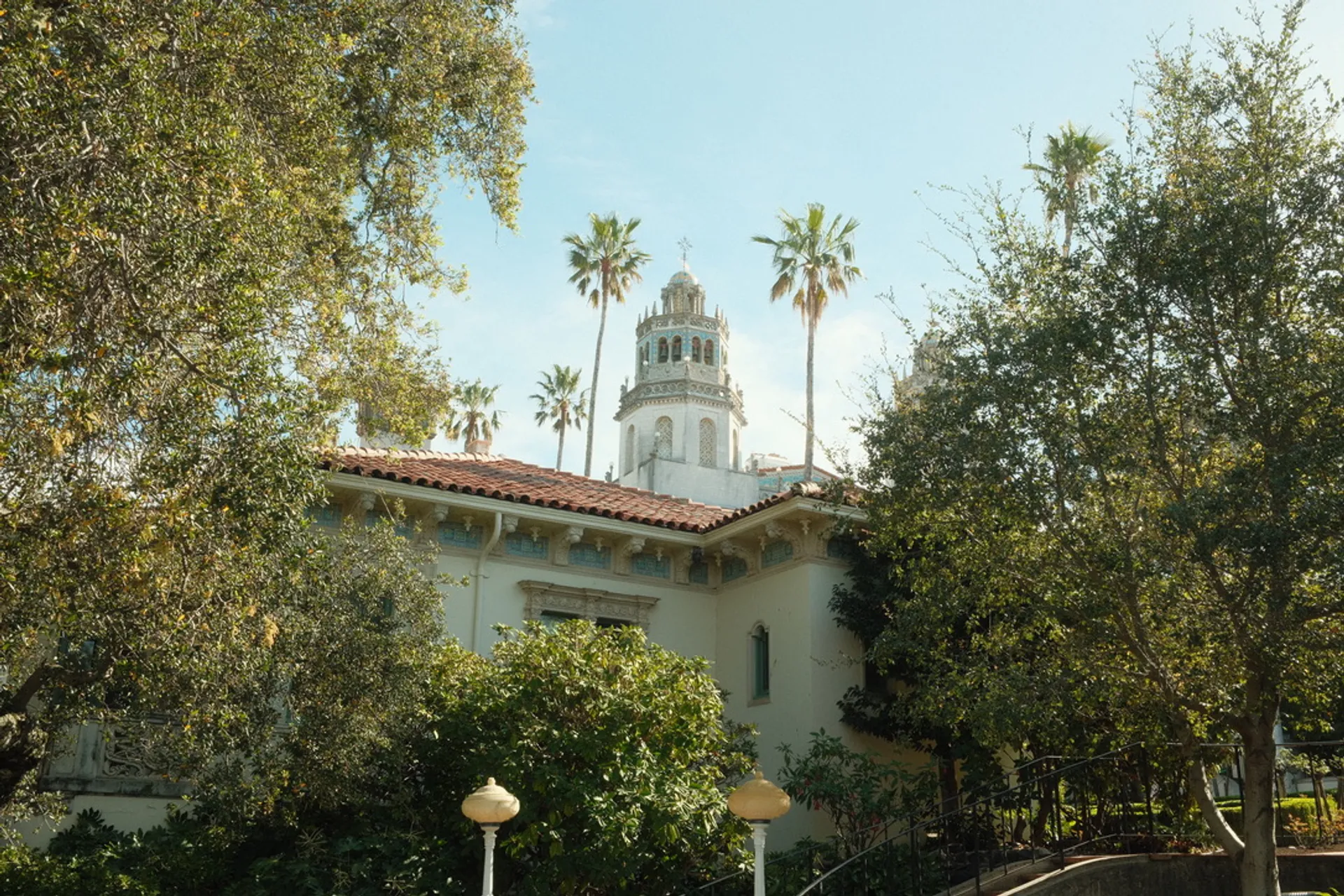
A gilded age monument dedicated to how money can't buy taste.
The climb to Hearst Castle starts at the visitor center. The shuttle winds up through green hills; the Pacific hangs in the haze to the west. Then the castle appears on the ridge—towers and tile roofs above the oaks and pines.
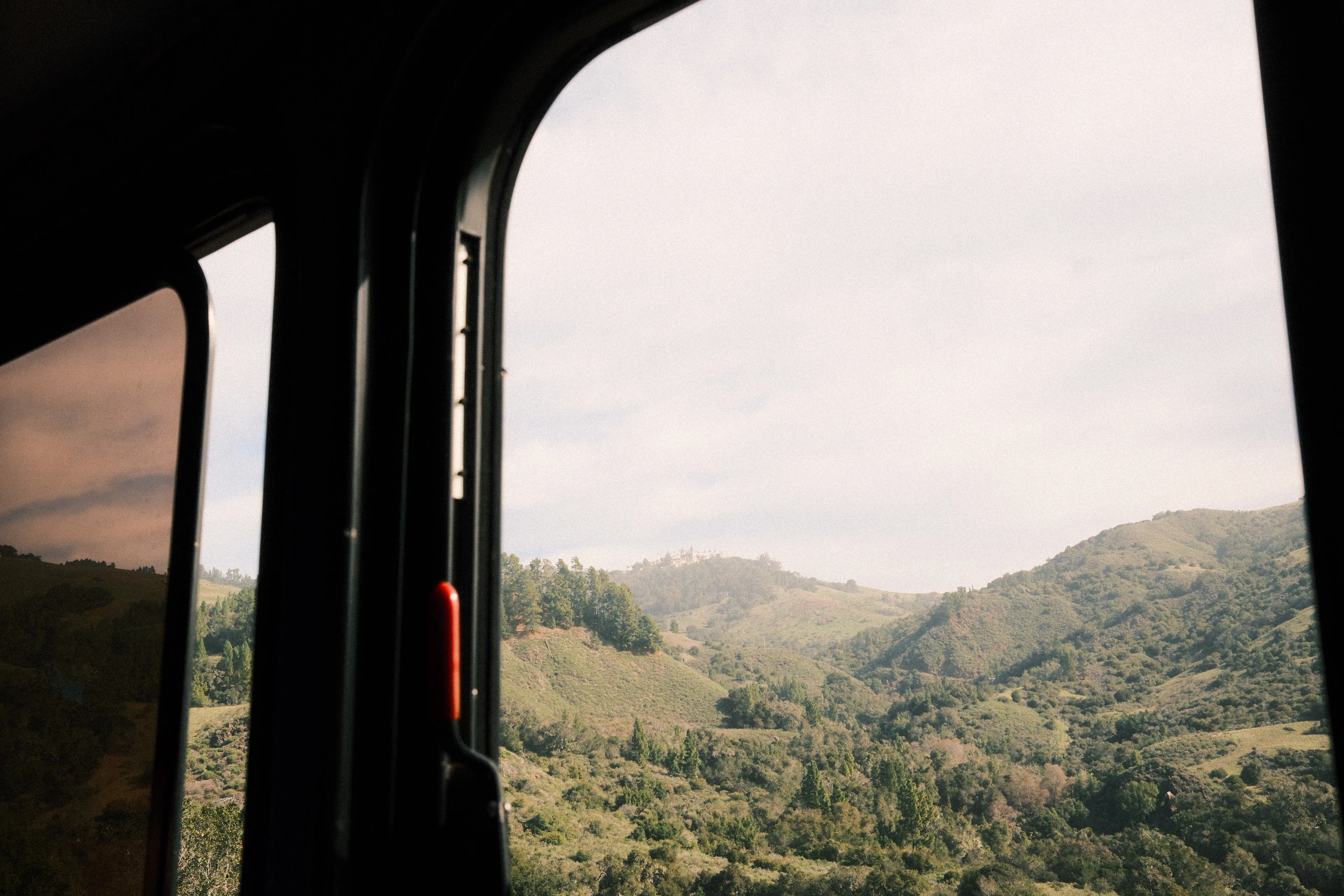 First sight of the castle from the road.
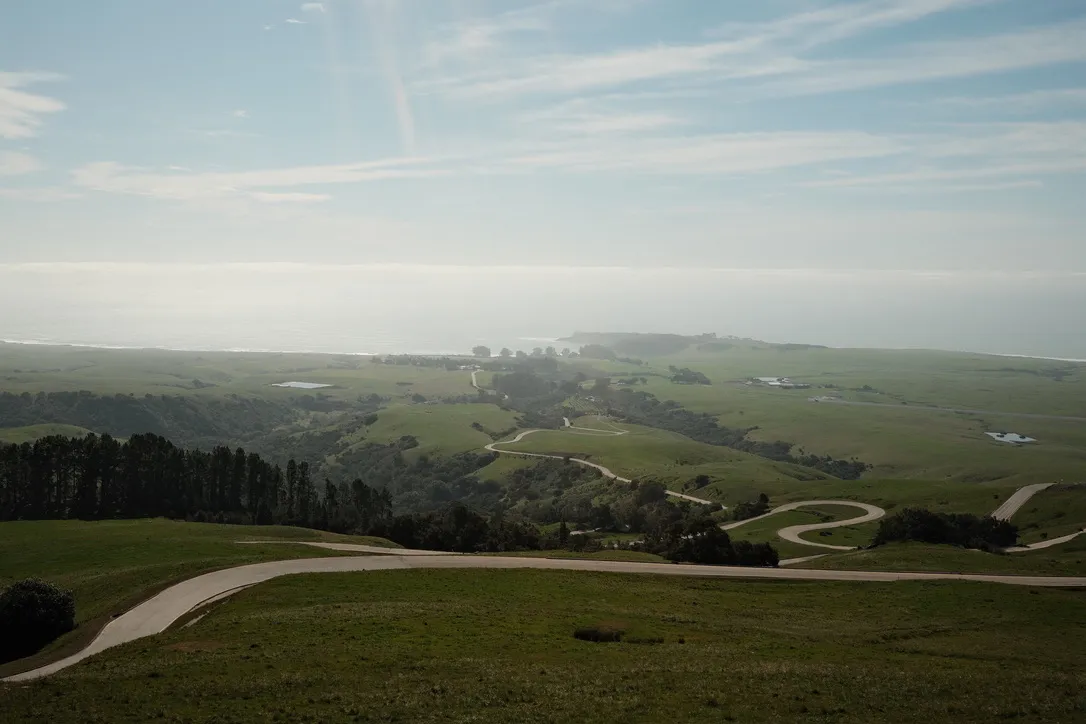 The approach through the San Simeon hills.
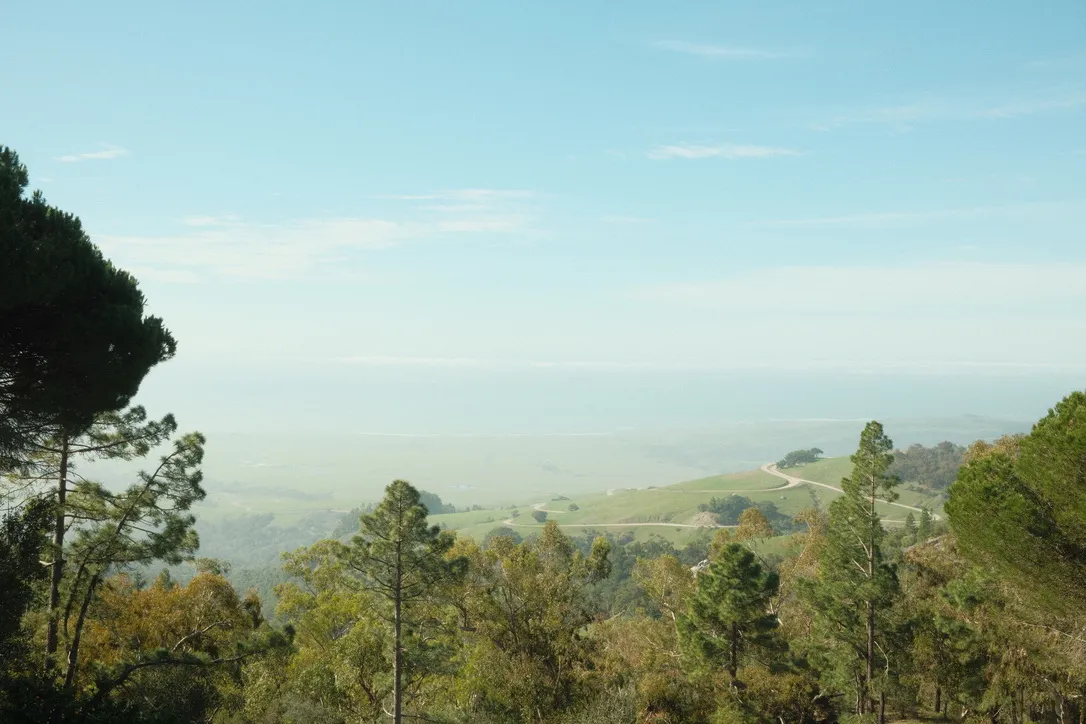 Hills and distant ocean from the climb.
 The ride up from the visitor center.
On the hill, the building is all detail: tiled domes, wrought-iron balconies, stone carving. Bougainvillea and palms frame the towers. Stone steps climb between cypresses, flowering trees, and orange groves; balustrades and carved pillars look out over the valley. A Moorish-style balcony sits above pink camellias and a quiet statue.
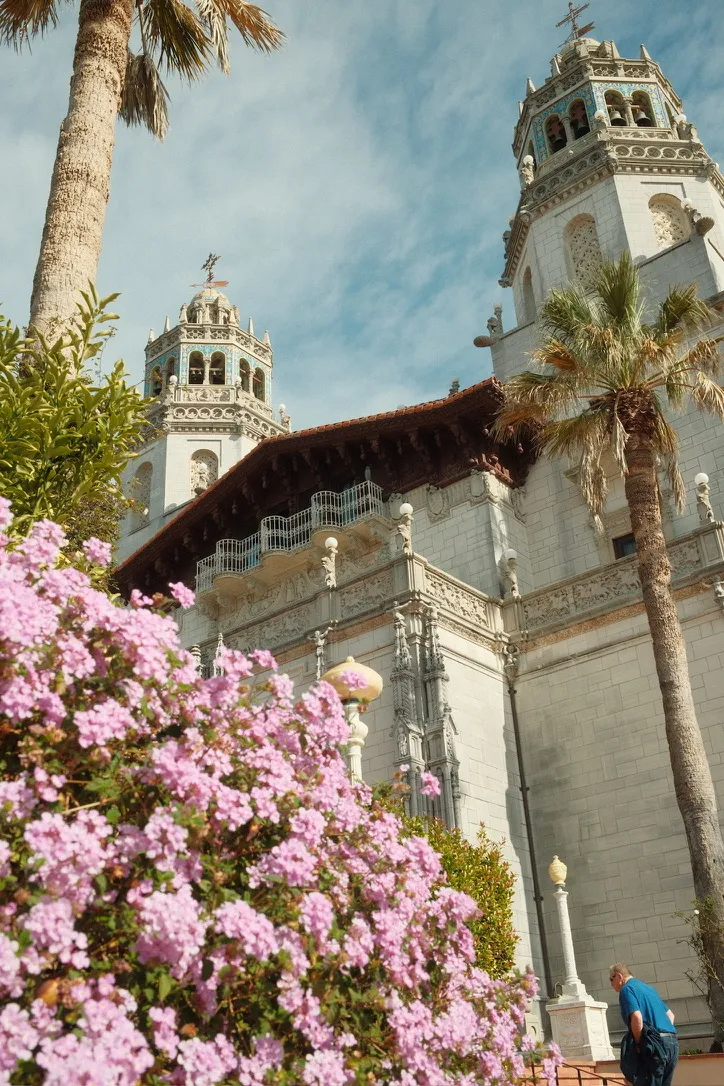 Towers and gardens at the top of the hill.
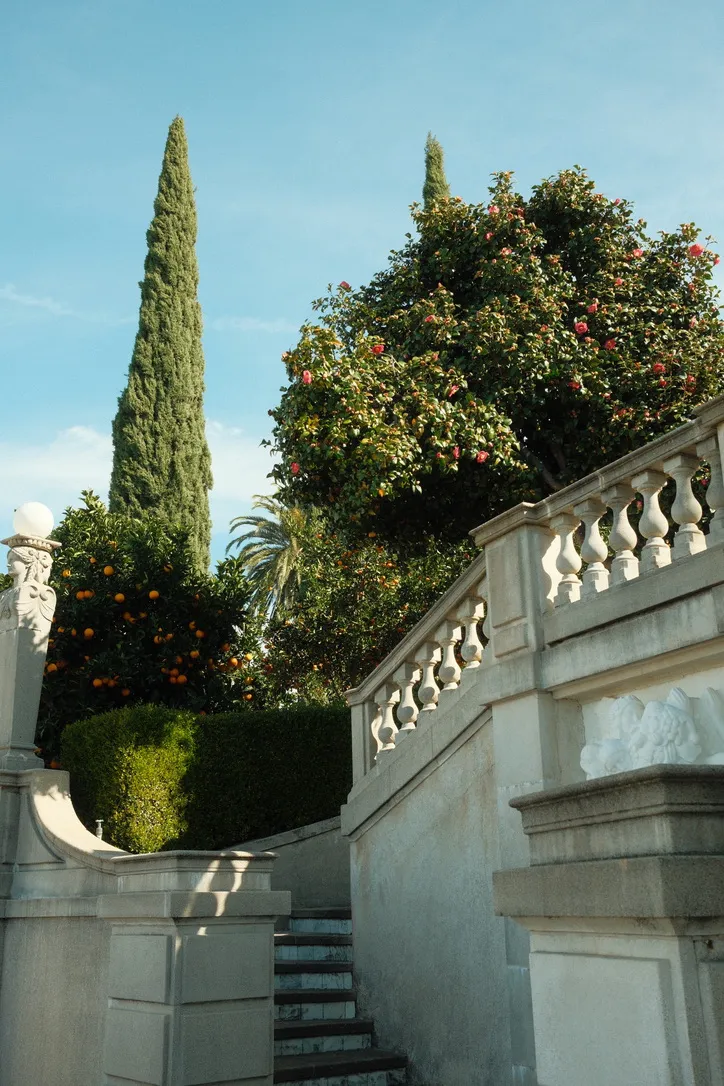 Garden staircase and orange grove.
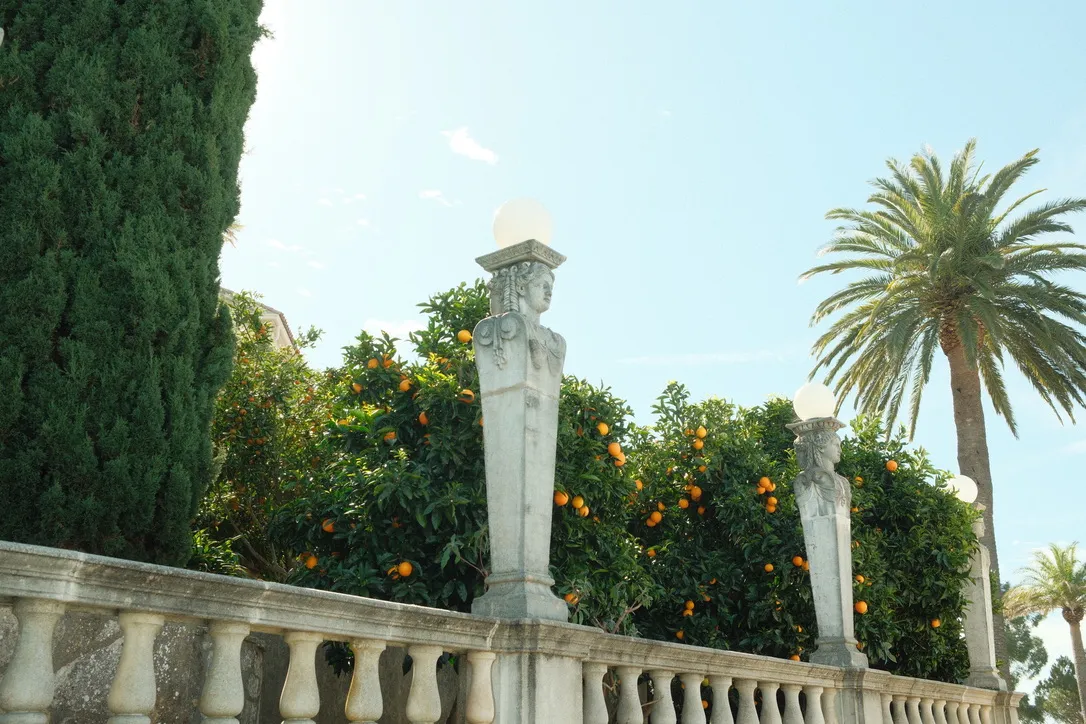 Terrace above the orange grove.
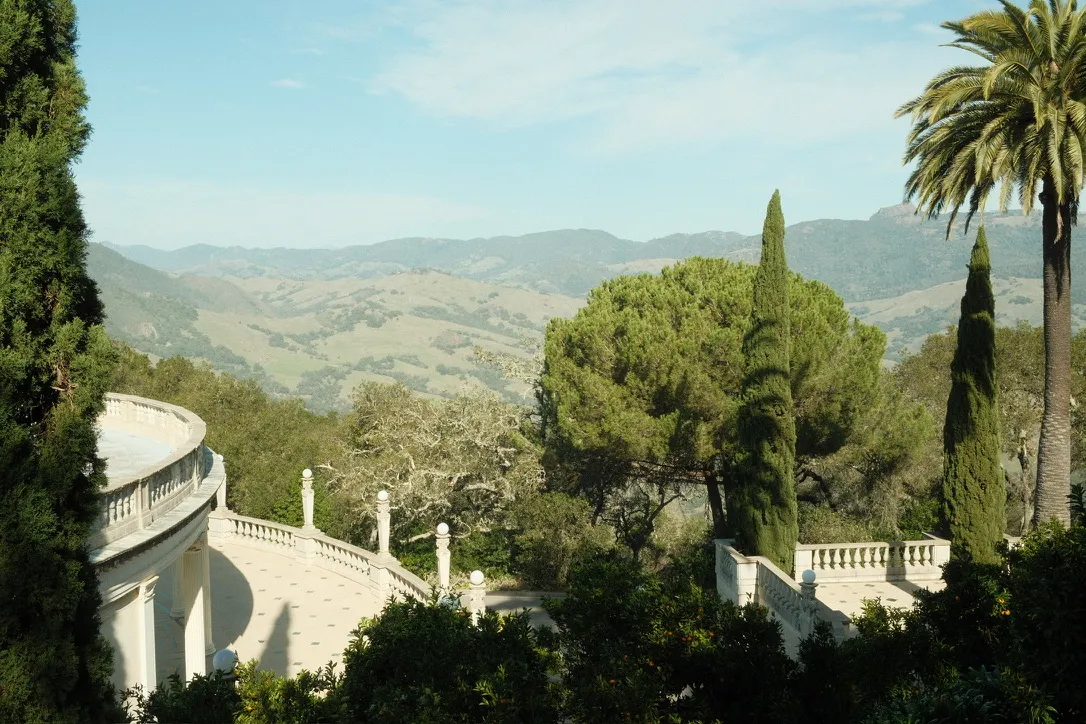 Valley vista from the terraces.
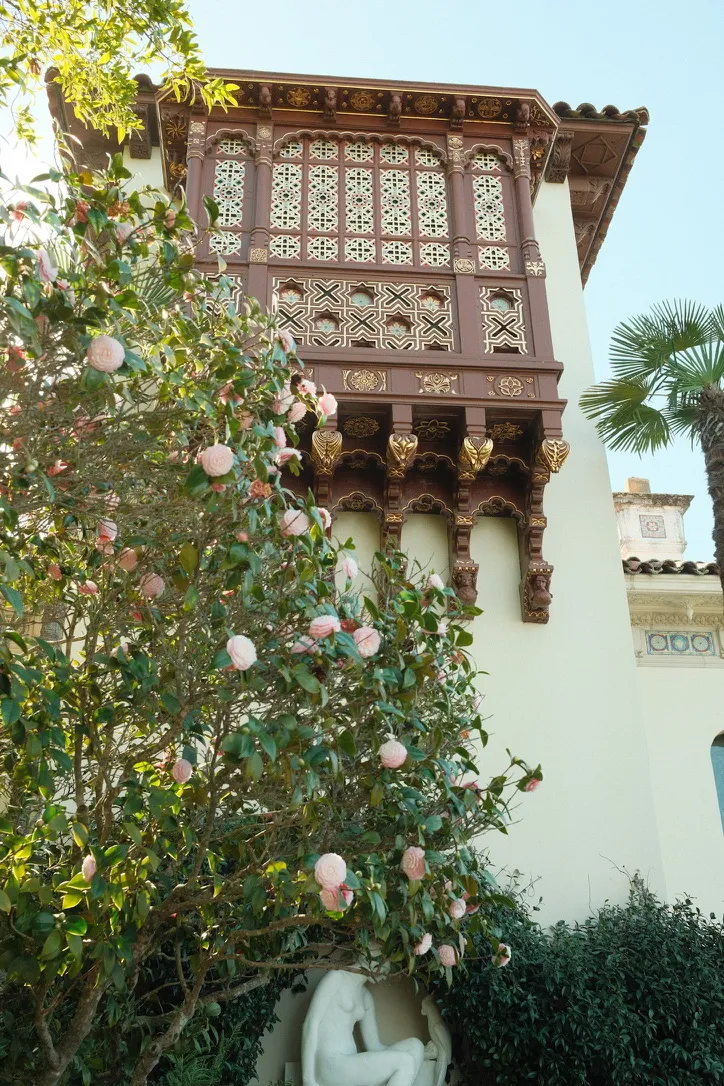 Moorish balcony and camellias.
The Neptune Pool sits in the open: turquoise water, a temple at one end, marble figures and a swan at the edges. Indoors, the Roman Pool is another world—blue and gold mosaics, Venetian glass, reflections of arches and statues in the water.
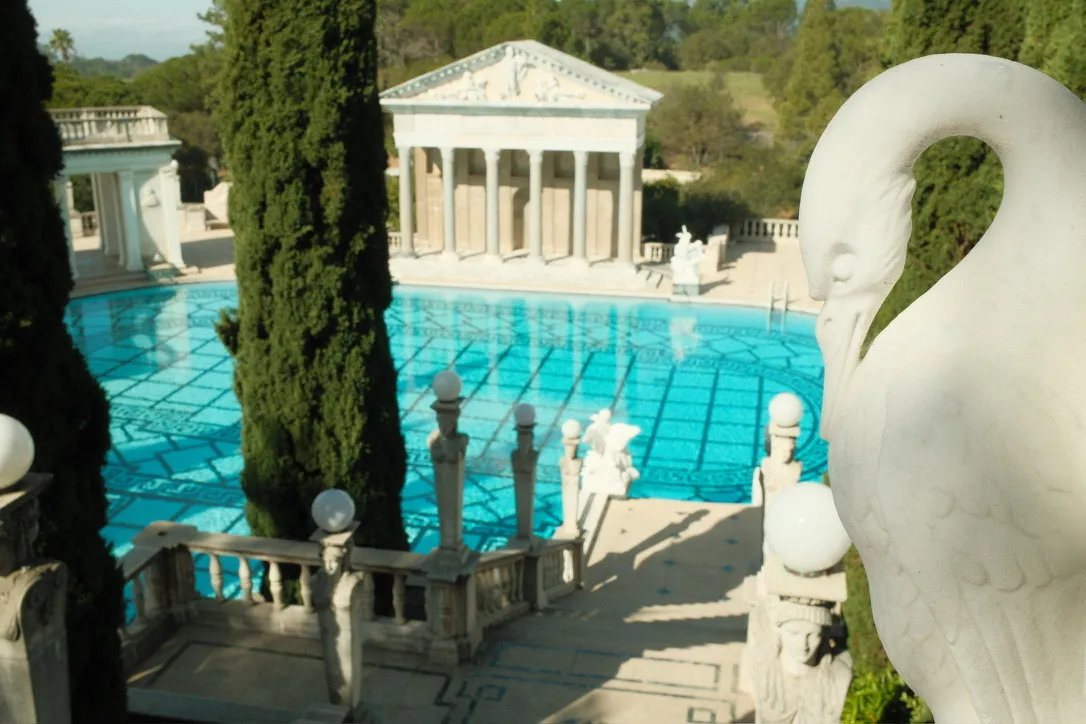 Neptune Pool and the temple colonnade.
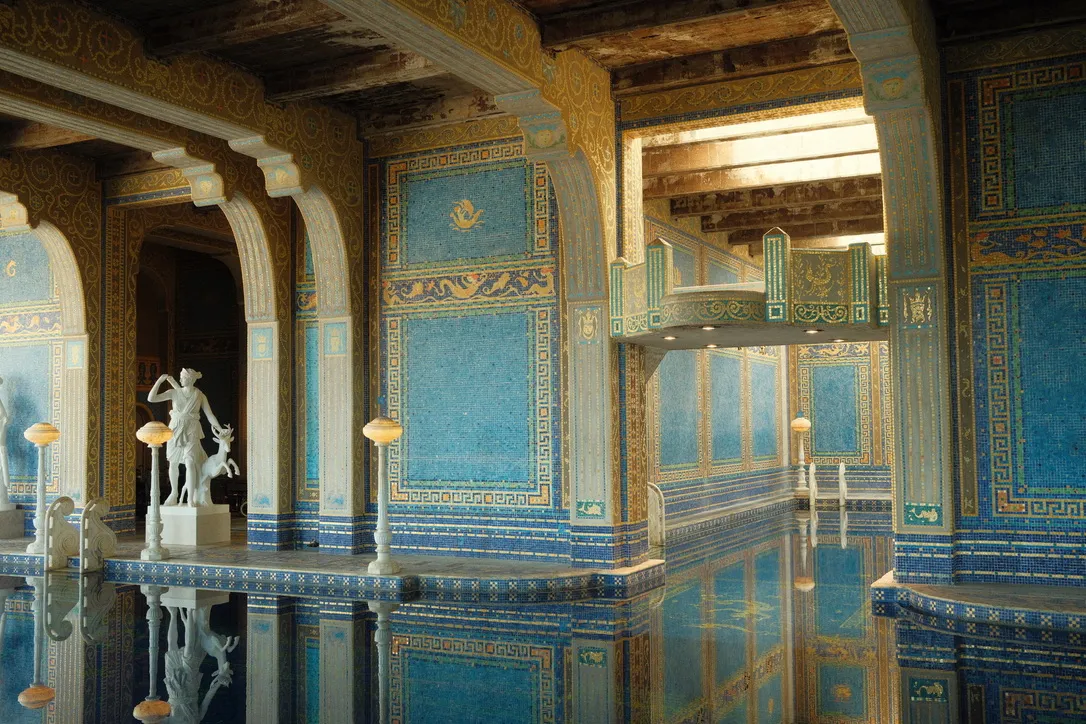 Roman Pool: mosaics and reflections.
Inside, the scale shifts again. The refectory runs the length of the hall: long tables, tapestries, banners, and chandeliers. Tours pause here so the guide can point out the fireplace, the silver, the carved ceiling. Deeper in, the billiard room keeps the same level of ornament—painted beams, mosaic walls, green felt under the lights.
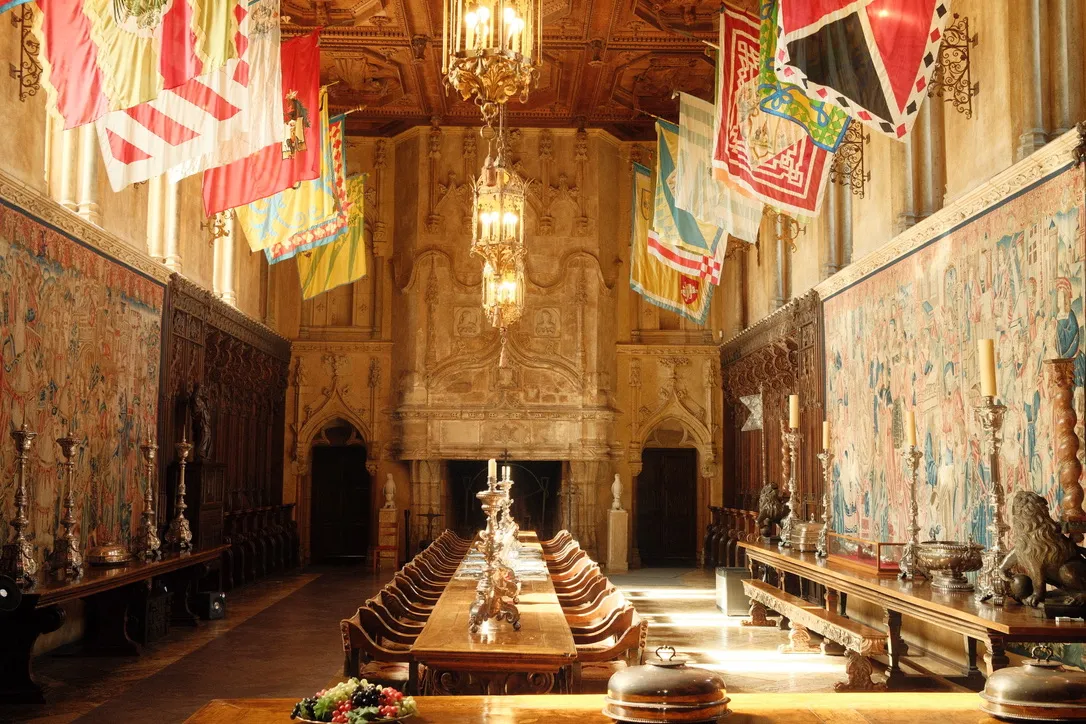 The refectory.
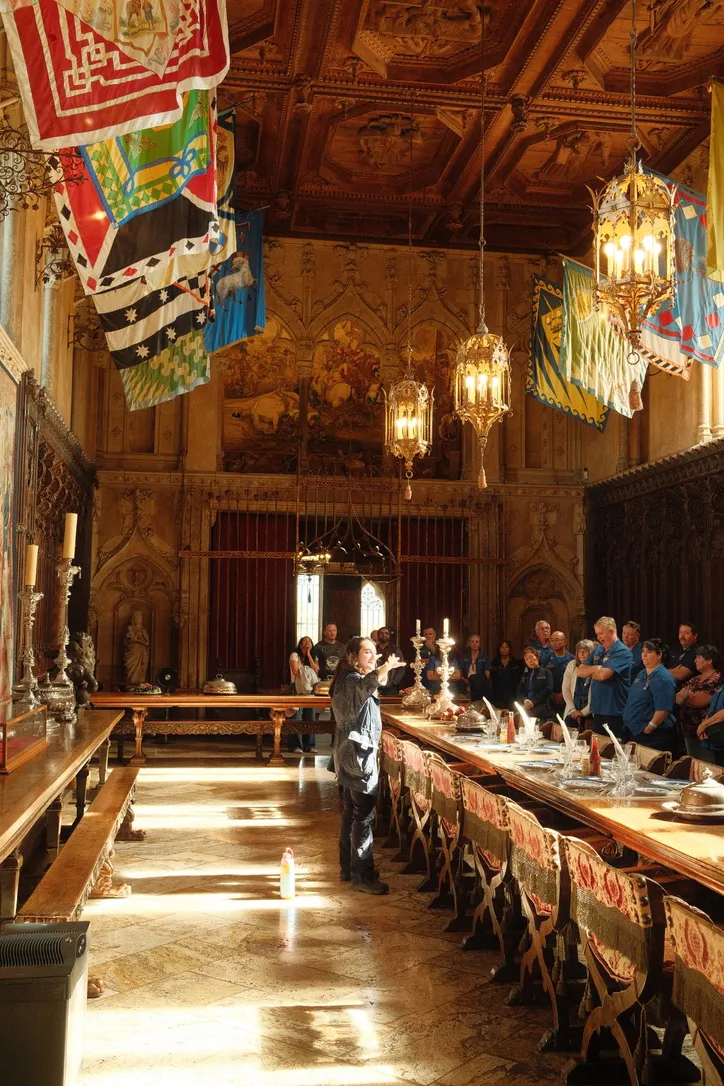 A tour in the refectory.
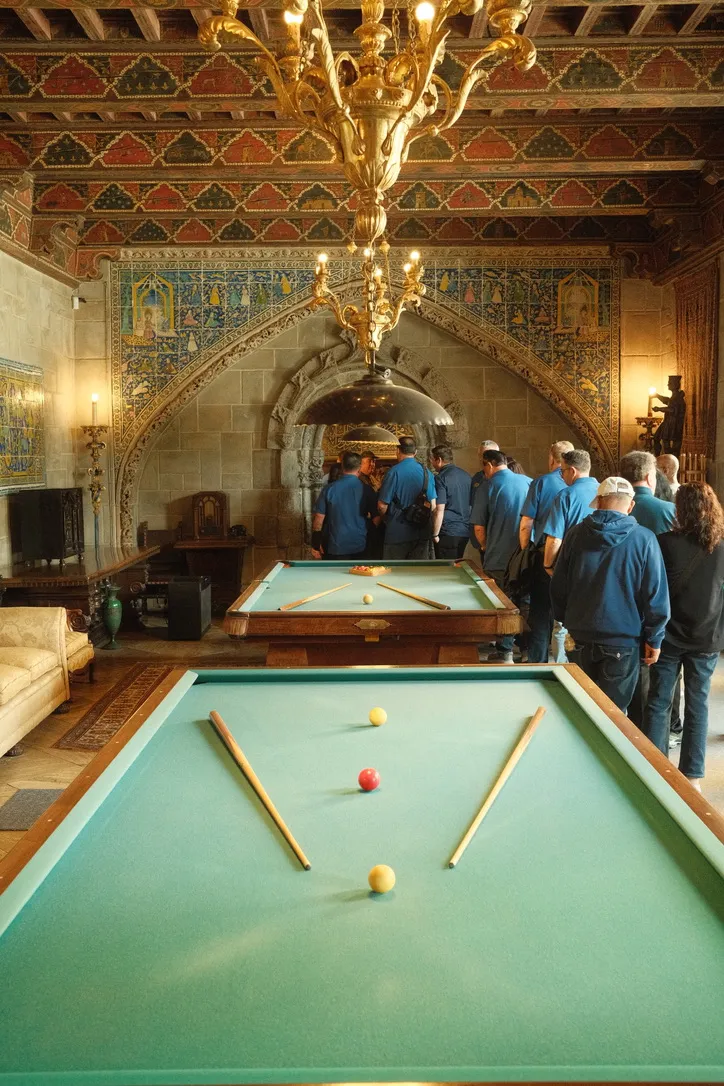 The billiard room.
William Randolph Hearst and Julia Morgan called this place La Cuesta Encantada, the enchanted hill. A century on, the road up, the pools, the terraces, and the rooms still feel like a single, lavish sequence—part Mediterranean fantasy, part California light.